Mouth Breathing and Tongue Posture: Signs and Next Steps
Breathing through the mouth most of the time is usually a sign the nose isn't doing its job. Here are the signs in kids and adults, and who can help.

On this page
Breathing through your mouth now and then, during a cold or a hard workout, is normal. Breathing through your mouth most of the time, especially during sleep, usually means air isn't moving easily through the nose. It's worth looking into, particularly in children, whose faces and airways are still growing. Tongue posture is closely tied to this: when the mouth hangs open, the tongue tends to rest low.
What counts as mouth breathing?
Mouth breathing means you regularly breathe through your mouth instead of your nose, at rest or while sleeping. Your nose filters, warms and humidifies the air you breathe. When the nasal passages are blocked or the habit is well set, the mouth takes over.
Signs to look for
In children
- Lips apart and mouth open while resting, watching a screen or concentrating
- Snoring, noisy breathing or restless sleep
- Pauses in breathing or gasping during sleep
- Dry, chapped lips or bad breath
- Frequent congestion or a constantly "stuffy" voice
- Daytime tiredness, irritability or trouble focusing
- A dentist mentioning a narrow palate, crowded teeth or a bite that doesn't line up
In adults
- Waking with a dry mouth
- Snoring, or drool on the pillow
- Bad breath
- Hoarseness
- Waking up tired even after a full night in bed
What is tongue posture, and why does it matter?
Tongue posture is where your tongue rests when you're not eating or talking. A resting position that many dental and myofunctional providers describe is the whole tongue resting gently against the roof of the mouth, lips closed, teeth slightly apart, and breathing through the nose.
When the mouth is open, the tongue usually drops to the floor of the mouth. A 2022 review in Frontiers in Public Health describes how airway obstruction can lead to a lower tongue position. That can upset the balance of pressure between the tongue, lips and cheeks, a pattern associated with a narrower upper dental arch. The same review reported lower tongue pressure in children who mouth breathe.
The authors also note important limits: there's no high-quality evidence yet, diagnostic criteria aren't standardized, and the mechanisms remain unclear. Mouth breathing and changes in facial growth are associated, but the research doesn't yet show exactly how one affects the other.
A restricted tongue can also make it harder for the tongue to rest high in the mouth. That's one reason tongue-tie, mouth breathing and airway concerns are often evaluated together. See our guide to bodywork before and after a tongue-tie release.
Common causes
Most chronic mouth breathing starts with something that makes nasal breathing harder:
- Enlarged adenoids or tonsils, the most common cause in children
- Allergies or chronic rhinitis
- Frequent colds or sinus problems
- A deviated septum or enlarged turbinates
- Nasal polyps
- Sleep apnea
Sometimes the open-mouth habit remains even after the original cause has been treated. That's one reason retraining resting posture is often part of the plan.
Why it matters
For children, Cleveland Clinic notes that chronic mouth breathing can affect facial development, how the teeth line up, sleep and behavior. Children with sleep-disordered breathing may show irritability or attention difficulties that can look like ADHD.
For adults, mouth breathing is generally less serious, but it can affect sleep quality and dental health, and it can be a sign of an underlying airway problem like sleep apnea that deserves attention.
Collaborative care: who does what
Mouth breathing usually has more than one contributing factor, so a team approach makes sense:
- Pediatrician or primary care provider: the first stop, to check the nose, throat and sleep, and refer as needed
- ENT (ear, nose and throat specialist): evaluates adenoids, tonsils, septum and sinuses
- Allergist: helps manage allergies that keep the nose congested
- Dentist or orthodontist: watches palate and jaw development and may discuss options like palatal expansion
- Myofunctional therapist or speech-language pathologist: uses exercises to retrain tongue, lip and swallowing patterns
- Bodywork: addresses tension in the jaw, neck and floor of the mouth that may make new patterns harder to keep
On myofunctional therapy, a 2025 systematic review of randomized trials found it reduced sleep apnea severity in adults compared with controls. The authors also noted that only five trials were included and that larger, better-designed studies are needed.
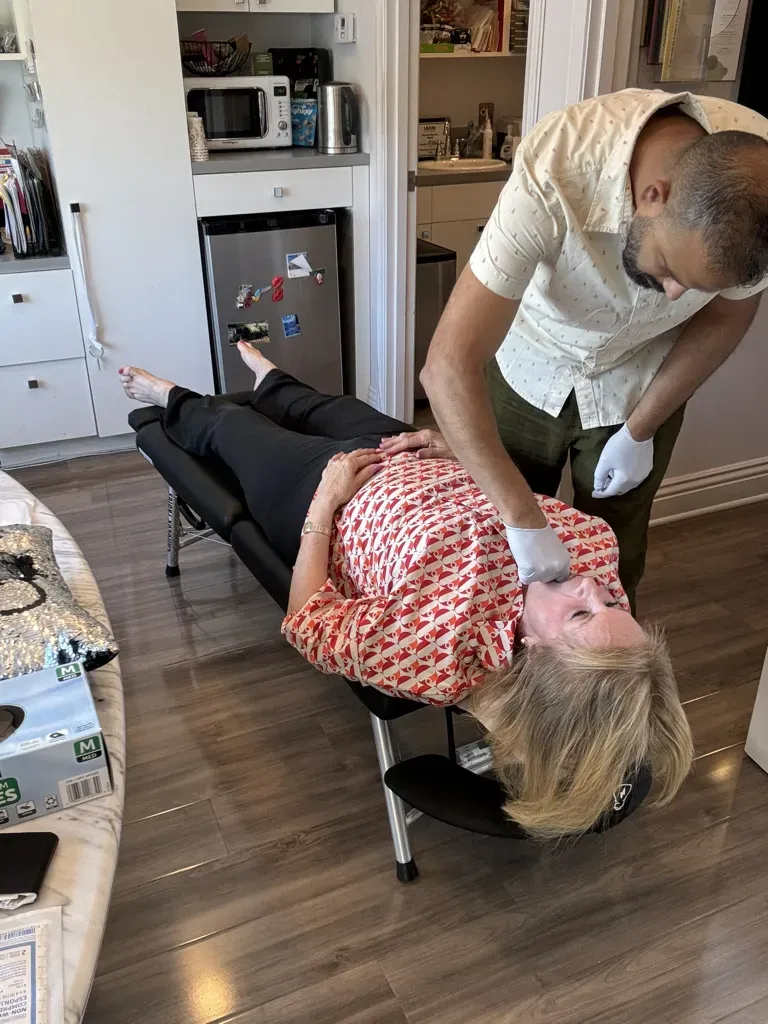
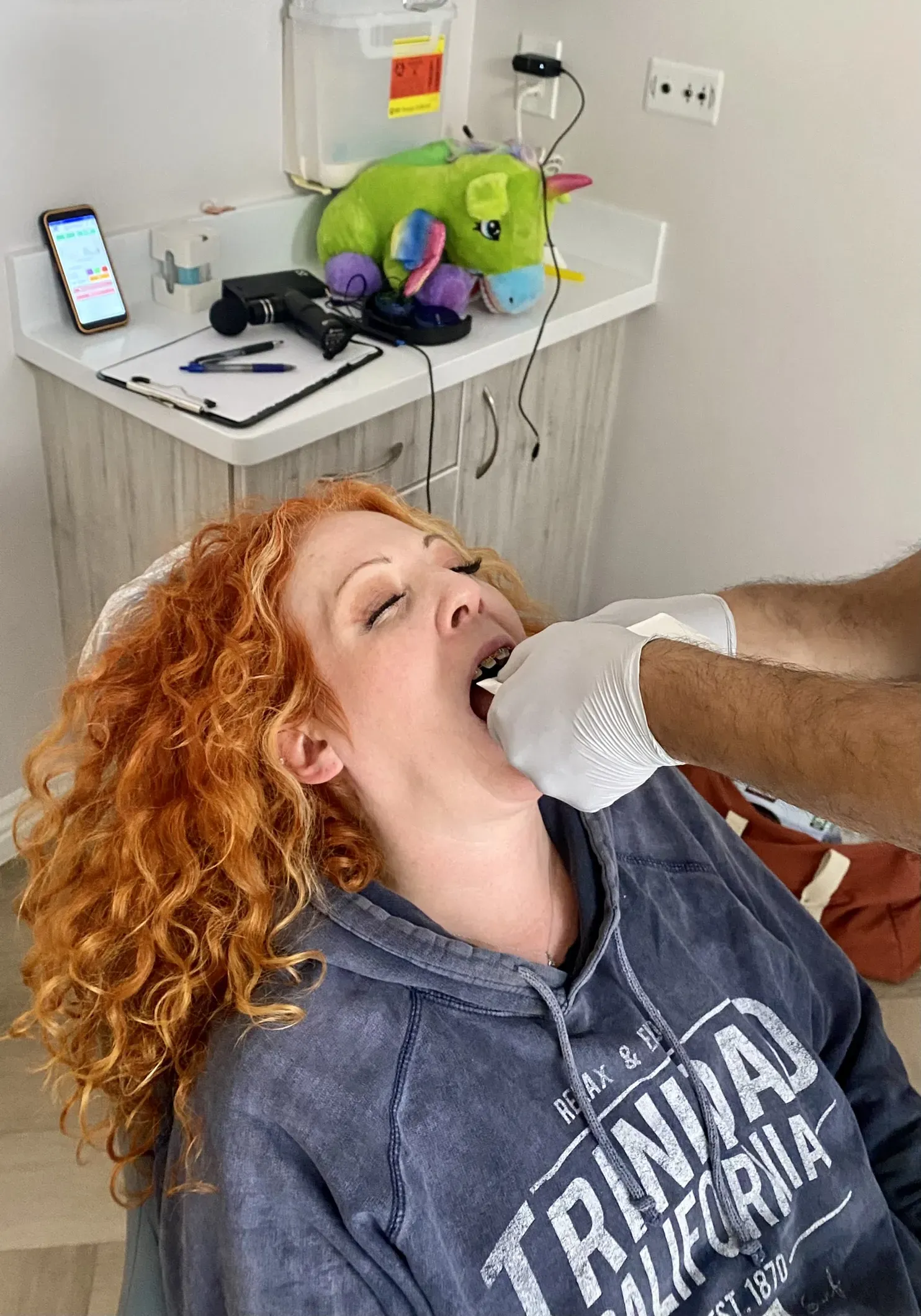
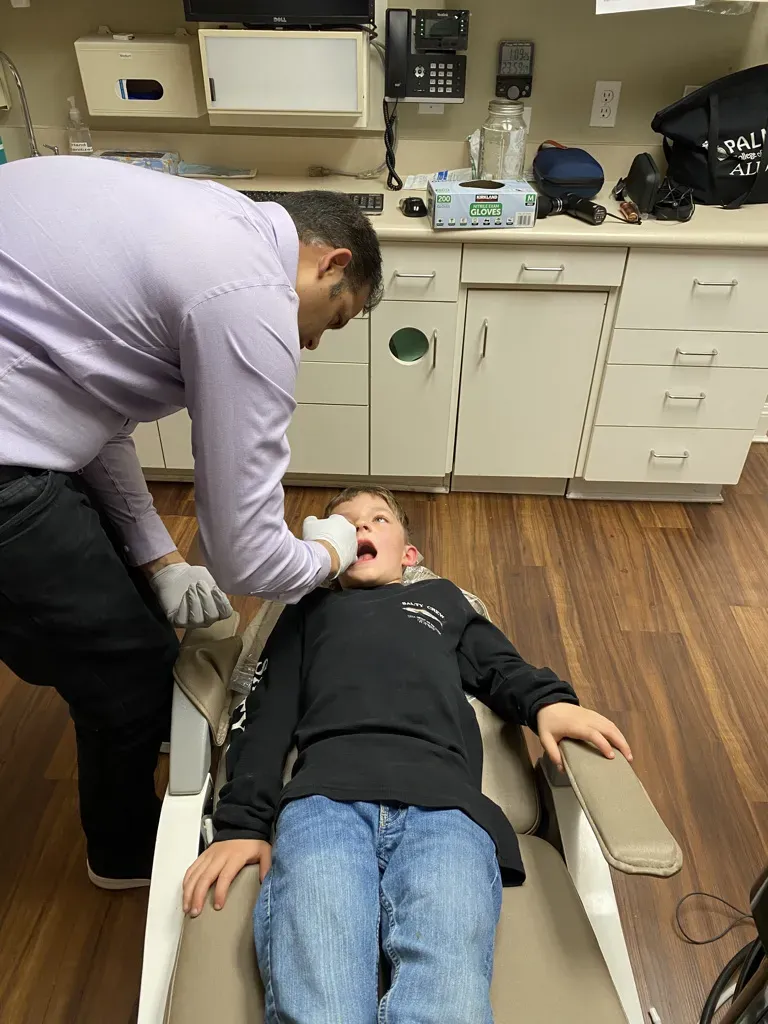
Dr. Neel works with dental, ENT, myofunctional, lactation and speech-language teams. His role is hands-on: easing tension around the jaw, tongue and floor of the mouth, and supporting patients before and after procedures such as tongue-tie release or palatal expansion. Clients commonly report easier, deeper breathing after sessions, though results vary.
Simple things to try at home
These won't fix a blocked airway, but they can build awareness and support the work you do with your providers:
- Notice. A few times a day, check: are your lips together? Where is your tongue resting? For kids, a gentle reminder works better than a constant correction.
- Practice resting posture. Place the tip of the tongue just behind the upper front teeth, let the rest of the tongue settle up against the roof of the mouth, close the lips and breathe softly through the nose for a minute or two. Don't force it. If you can't comfortably breathe through your nose, stop and talk to a provider.
- Support a clear nose. Ask your doctor about managing allergies or congestion, and keep sleeping spaces clean and dust-free.
- Skip mouth taping unless a provider advises it. Taping the mouth shut when the nose is blocked can make breathing harder. This matters most for children.
For a guided approach, the self-guided Tongue Press course includes five videos, four audio sessions and a PDF guide you can work through at your own pace.
When to see a medical provider
Talk with your pediatrician or doctor if:
- Your child snores most nights, or you notice pauses in breathing or gasping during sleep
- Your child breathes through the mouth most of the day or has ongoing congestion
- There are changes in behavior, attention, bedwetting or daytime sleepiness alongside sleep concerns
- You snore loudly, someone has noticed pauses in your breathing, or you wake unrefreshed or with morning headaches
Seek urgent care for any difficulty breathing, bluish lips, or struggling to breathe during illness.
Frequently asked questions
Is mouth breathing bad for kids?
Occasional mouth breathing during a cold isn't a concern. Chronic mouth breathing is worth evaluating, because it can be linked to sleep problems and to changes in facial and dental development while a child is still growing.
Can mouth breathing change the shape of your face?
Research shows an association between chronic mouth breathing in childhood and certain facial and dental patterns, such as a narrow palate or bite changes. The evidence is still limited and the mechanisms aren't fully understood, so early evaluation is the sensible step.
What is proper tongue posture?
Many providers describe the tongue resting gently against the roof of the mouth, with the lips closed, teeth slightly apart and breathing through the nose. If that position feels impossible or uncomfortable, it's worth having your airway and tongue mobility checked.
Can myofunctional therapy fix mouth breathing?
Myofunctional therapy can help retrain tongue and lip habits, and research in adults with sleep apnea is encouraging but still limited. If the nose or airway is blocked, that cause needs medical attention too.
Should I tape my mouth at night?
Only with guidance from a medical provider, and not for children unless their provider recommends it. If your nose is blocked, taping can make breathing harder.
Getting started
If you or your child is working on breathing and tongue posture, Virtual Sessions let you work with Dr. Neel from anywhere, and the Tongue Press course above is a self-paced starting point. In Santa Barbara, Standard Patient Care offers in-person sessions for all ages. Questions? Reach out here.
This article is for educational purposes and isn't a substitute for individual medical advice. Please talk with your pediatrician, doctor, dentist or other licensed provider about your specific situation.
Sources
- Cleveland Clinic. Mouth Breathing: Symptoms, Complications & Treatment
- Lin L, Zhao T, Qin D, Hua F, He H. The impact of mouth breathing on dentofacial development: A concise review. Frontiers in Public Health, 2022.
- dos Anjos Ferreira LG, et al. Myofunctional Therapy for the Treatment of Obstructive Sleep Apnea: Systematic Review and Meta-Analysis. International Archives of Otorhinolaryngology, 2025.