Bodywork Before and After a Tongue-Tie Release
A release frees the tissue under the tongue. Bodywork before and after aims to help the jaw, tongue and body use that new freedom. Here's what to expect.

On this page
- What a tongue-tie release does (and doesn't do)
- Why tension builds around a restricted tongue
- Bodywork before a release
- Bodywork after a release
- What to expect during recovery
- How bodywork fits with your care team
- When to contact a medical provider
- Frequently asked questions
- Getting support before and after your release
- Sources
If you or your child has a tongue-tie release coming up, you may have heard that bodywork before and after the procedure can help. In short, a frenectomy or frenuloplasty releases tight tissue under the tongue. Bodywork works on the tension that has built up around it in the jaw, neck and body, so the tongue can make better use of its new range. It supports the procedure and your care team. It doesn't replace either one.
What a tongue-tie release does (and doesn't do)
Tongue-tie (ankyloglossia) means the lingual frenulum is short or tight enough to restrict how the tongue moves. The frenulum is the fold of tissue that connects the underside of the tongue to the floor of the mouth. Everyone has one, and a visible frenulum isn't a problem on its own. What matters is function: how well the tongue can lift, extend and move side to side for feeding, swallowing, speaking and resting in the mouth.
When a release is recommended, a pediatric dentist, ENT or other trained provider performs it. A frenotomy is a quick snip of the frenulum, most often done in infants. A frenuloplasty is a more involved release, sometimes closed with stitches, and is more common in older children and adults. Some providers use a laser.
What the procedure can't do on its own is teach the tongue new habits. A body that has spent months or years working around a restriction often keeps those workarounds after the tissue is released. That's where bodywork and other functional therapies come in.
Why tension builds around a restricted tongue
The tongue doesn't work alone. Through muscle and connective tissue it connects to the jaw, the hyoid bone in the upper neck and the floor of the mouth, and from there to the neck and upper back. When tongue movement is limited, other muscles often pick up the slack.
Care teams commonly look for patterns like these:
- In babies: a shallow latch, clicking or slipping off during feeds, a jaw that doesn't open wide, a strong preference for turning the head one way, or arching during feeds
- In children and adults: jaw clenching, tight neck and shoulders, a forward head position, mouth breathing, effortful swallowing, or frequent headaches
None of these signs proves a tongue-tie. Each has many possible causes, which is why an evaluation by the right provider comes first. If you're a nursing parent, our article on breastfeeding and signs of tension in babies goes deeper.
Bodywork before a release
Sessions before a release usually aim to:
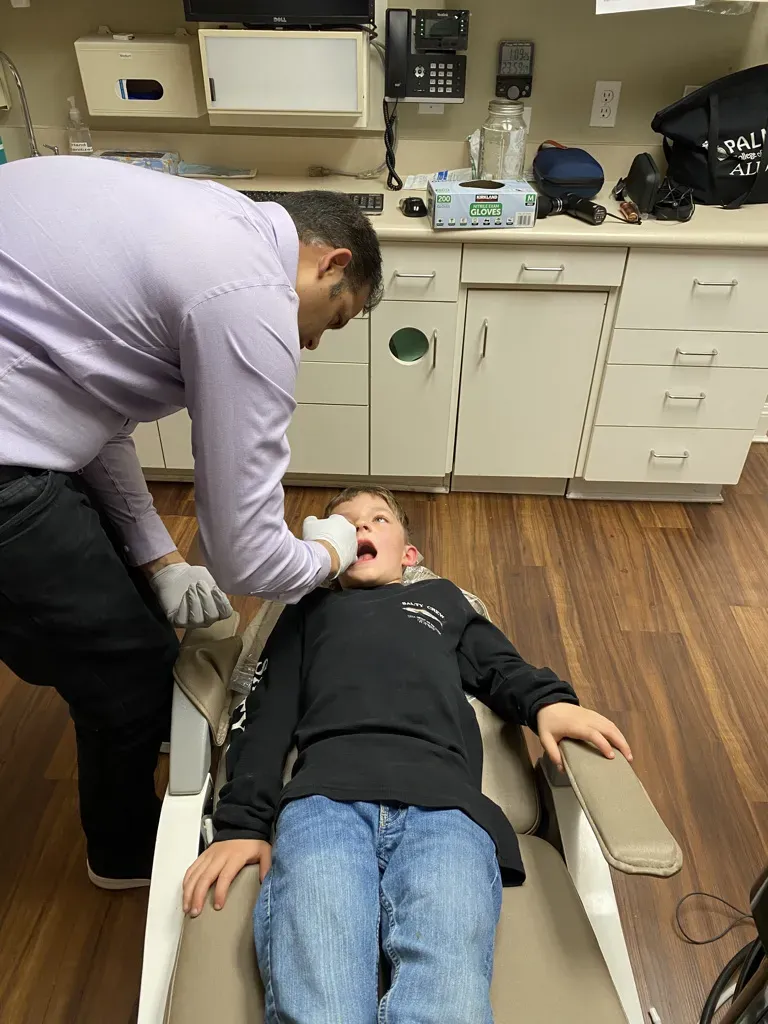
- Ease tension in the jaw, neck and floor of the mouth, so the restriction itself is easier to assess and the tissues around it are more relaxed
- Build comfort with touch around the face and mouth, which can help babies and sensitive children
- Set a baseline, so you and your team can notice changes afterward
- Coordinate with your team, so everyone works from the same plan
Many families schedule bodywork in the days or weeks before the procedure. The provider doing the release, along with your lactation consultant, myofunctional therapist or speech-language pathologist, should guide the timing.
Bodywork after a release
After the procedure, the focus shifts to two things: supporting comfortable healing, and helping the tongue and the rest of the body adapt to the new range of motion. Depending on age and needs, a session might include:
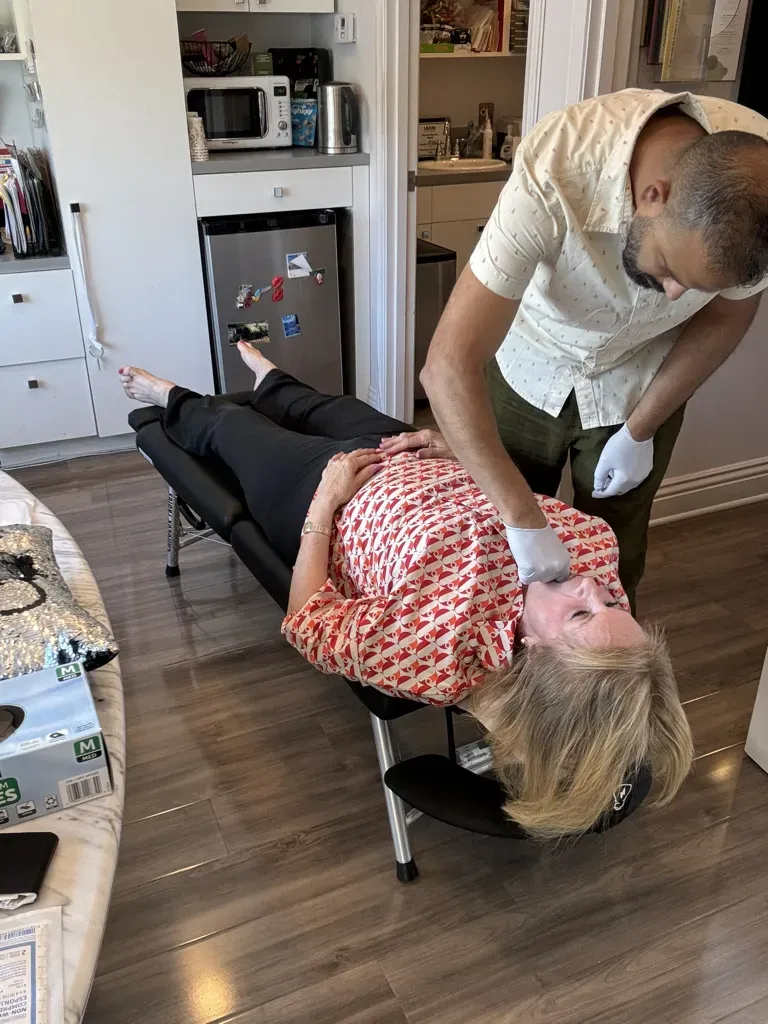
- Gentle work around the jaw, neck, skull and floor of the mouth
- Attention to how breathing, swallowing and feeding look and feel
- Simple home practices you can repeat between visits
In Dr. Neel's practice, the work can be gentle, slow and subtle, or deeper and more structural when that's needed and welcomed. He may also use violet laser or vibration therapy when he feels they're indicated, and may address primary reflex integration and dural tube tension when they're part of the picture.
A note on stretches. Aftercare instructions differ between providers. Some recommend wound stretches or tongue exercises after a release. Others, such as a children's hospital teaching sheet listed below, state that stretching isn't needed after their procedure. Follow the instructions from the provider who did your release. Bodywork should support their plan, not compete with it.
What to expect during recovery
Every recovery is different, but hospital and lactation aftercare guides describe some common patterns:
- The first day or two: Some soreness is expected, and babies may be unsettled for a little while. Feeding, cuddling and pain relief recommended by your provider usually help.
- The first week: A white, yellow or gray patch under the tongue is a normal part of healing. Feeding may feel different as the tongue learns new movements, and some babies take a week or two to adjust.
- The following weeks: This is when coordinated follow-up matters most: lactation support, myofunctional or feeding therapy, and any bodywork follow-ups your team suggests.
How bodywork fits with your care team
The American Academy of Pediatrics (AAP) published a clinical report on tongue-tie and breastfeeding in 2024. It recommends a team approach that includes lactation consultants and speech-language pathologists. For infants with breastfeeding concerns, it also encourages clinicians to consider nonsurgical options before a frenotomy. The AAP also notes that physical, craniosacral and myofascial therapies are not well studied, and families often pay for them out of pocket.
That's worth saying plainly: support for bodywork around tongue-tie releases comes mostly from clinical experience, not large trials. It's one piece of collaborative care, not a stand-alone treatment. Dr. Neel works alongside dental, ENT, myofunctional, lactation (IBCLC) and speech-language professionals for exactly this reason.
When to contact a medical provider
After a release, call the provider who did the procedure, or your pediatrician or doctor, if you notice:
- Bleeding that doesn't stop with gentle pressure, or unusual bleeding or bruising
- A fever, especially one that lasts or doesn't come down with fever medicine
- Swelling, spreading redness or signs of infection under the tongue
- Refusing to feed or drink, fewer wet diapers, or unusual sleepiness or irritability
- Pain that is severe or getting worse
A bodywork session isn't the place to manage these concerns. Contact your medical provider, and call 911 for any trouble breathing.
Frequently asked questions
Is bodywork required before a frenectomy?
No. Some babies, children and adults do well with a release plus lactation or myofunctional support alone. Bodywork is an optional addition that many families and providers find helpful, especially when there's noticeable tension in the jaw, neck or body.
Is bodywork safe for newborns?
Bodywork for infants should be very gentle and done by a practitioner experienced with babies. You stay with your baby throughout, and you can pause or stop at any time. Let your pediatrician know about any care your baby is receiving.
How many sessions will we need?
There's no set number. It depends on age, how long the compensation patterns have been in place, and how your baby or body responds. Your practitioner should explain their reasoning and adjust the plan as things change.
Can bodywork fix a tongue-tie without a procedure?
No. Bodywork can't lengthen or remove a restrictive frenulum. It may ease tension around it, and the AAP encourages nonsurgical approaches such as lactation support first for many babies. Whether a release is needed is a decision for your medical or dental provider and feeding team.
Can adults benefit from bodywork around a frenuloplasty?
Many adults carry long-standing jaw, neck and breathing compensations. Bodywork before and after an adult release is a common reason people come to Dr. Neel, and support around palatal expansion is another.
Getting support before and after your release
If you're near Santa Barbara, Standard Patient Care offers in-person sessions for babies, children and adults. If you live elsewhere, Virtual Sessions include pre- and post-op support for tongue-tie releases and palatal expansion, with guidance you can use at home. Not sure which fits? Send a short inquiry and the team will help you plan next steps with your existing providers.
This article is for educational purposes and isn't a substitute for individual medical advice. Please talk with your pediatrician, dentist or other licensed provider about your specific situation.
Sources
- American Academy of Pediatrics. Clinical Report Encourages Pediatricians to Consider Nonsurgical Options to Breastfeeding Concerns Amid Rise in Tongue-Tie Diagnoses (2024)
- Cleveland Clinic. Tongue-Tie (Ankyloglossia): Symptoms, Causes & Treatment
- Children's Wisconsin. Frenulotomy (Release of Tongue-Tie)
- La Leche League GB. Tongue Tie