TMJ and Jaw Tension: The Whole-Body Connection
Jaw pain rarely stays in the jaw. Learn how TMJ tension links to your neck, breathing and stress, what gentle self-care helps, and when to get checked.

On this page
Jaw tension and TMJ symptoms rarely start and stop at the jaw. The joint shares muscles, nerves and daily habits with your neck, breathing and posture, which is why jaw pain so often comes with headaches or tight shoulders. The good news is that most jaw problems improve with simple, reversible care, and looking at the whole body can help you find what keeps the tension going.
TMJ vs. TMD: a quick definition
TMJ stands for temporomandibular joint, the hinge-and-glide joint in front of each ear that connects your lower jaw to your skull. TMD (temporomandibular disorders) is the name for a group of more than 30 conditions that cause pain and dysfunction in those joints and the muscles that move the jaw.
According to the National Institute of Dental and Craniofacial Research (NIDCR), TMD affects about 5% of adults in the U.S. It is roughly twice as common in women as in men. Many cases are short-lived and settle on their own, while some become long-lasting.
Common signs of jaw tension and TMD
You might notice:
- Pain or tenderness in the jaw joint or chewing muscles
- Pain that spreads to the face, temples, neck or shoulders
- Headaches, often around the temples
- A jaw that feels stiff, limited or "stuck" when opening or closing
- Painful clicking, popping or grating in the joint
- Earaches or ringing in the ears
- Tooth pain, or a change in how your teeth fit together
One reassuring point from NIDCR: clicking or popping without pain is common and generally doesn't need treatment.
How the jaw, neck, breathing and posture connect
The jaw and the neck
The muscles that open and close your jaw work closely with the muscles that hold up your head. A 2020 systematic review found that people with TMD tended to report more neck disability, to be more sensitive to pressure around the head and neck, and to have less neck range of motion than people without TMD. Interestingly, it did not find clear differences in posture or cervical alignment. Most of the included studies were snapshots in time, so they can't show which problem causes which.
The takeaway: your neck is worth paying attention to when your jaw hurts, even if "bad posture" isn't the whole story.
The jaw and breathing
At rest, the tongue usually sits gently against the roof of the mouth, with the lips closed and breathing through the nose. When the nose is congested or the tongue rests low, the mouth tends to hang open and the jaw drops. People often adjust their head and neck position to keep air moving. Over time, that pattern can add load to the jaw and neck muscles. If this sounds familiar, our article on mouth breathing and tongue posture covers the signs and next steps.
The jaw and stress
Many people clench or grind without realizing it, especially during focused work, driving or sleep. NIDCR notes that genetics, psychological and life stress, and the way a person processes pain all appear to play a role in who develops TMD and whose symptoms persist. Cleveland Clinic lists daytime clenching, chewing on pens or ice, poor posture and stomach sleeping among habits that can add to jaw strain.
The floor of the mouth
Beneath your tongue is a layer of muscles that links the jaw, the tongue and the hyoid bone in your upper neck. Dr. Neel's work pays particular attention to this area, which he calls the mandibular diaphragm. You can read more in what the floor of the mouth is and why it matters.
Gentle, reversible self-care
NIDCR recommends starting with simple, reversible steps. Many people find these helpful:
- Give the jaw a break during flare-ups. Choose softer foods, cut food into smaller pieces and skip gum and very chewy foods.
- Use heat or cold. A warm compress can relax tight muscles, and a cold pack can calm a sore joint. Use whichever feels better.
- Check your resting position. Lips gently closed, teeth slightly apart and tongue resting lightly on the roof of the mouth. If you catch yourself clenching, let the teeth part.
- Reduce jaw-heavy habits like nail biting, chewing on pens and resting your chin on your hand.
- Make room for downshifting. Slow nasal breathing, a short walk or a few minutes of relaxation can ease the tension that drives clenching.
- Take posture breaks during long screen sessions so your head isn't pushed forward for hours.
- Use over-the-counter pain relief only as directed, and check with your doctor or pharmacist if you have other health conditions.
NIDCR also advises caution with treatments that permanently change your bite or jaw, such as grinding down teeth, crowns placed to treat TMD, or surgery. It notes there isn't enough evidence that bite-altering treatments help TMD, and they can make it worse. If someone recommends an irreversible procedure, ask about simpler options first and consider a second opinion.
How whole-body bodywork may help
NIDCR lists manual physical therapy among conservative approaches for TMD. Hands-on care from other trained professionals, including chiropractors and bodyworkers, is also widely used, though research on specific techniques is still developing.
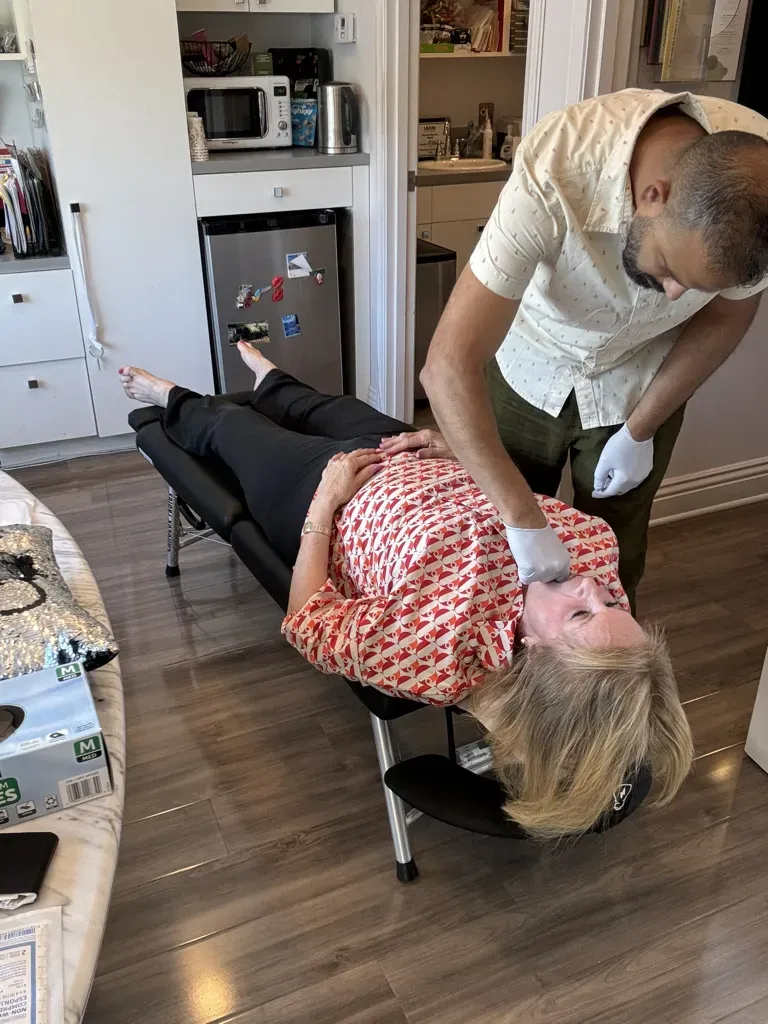
Dr. Neel looks at the jaw in the context of the whole body. A session may include:
- Assessment of the jaw, neck, floor of the mouth and breathing, and of how you stand and walk
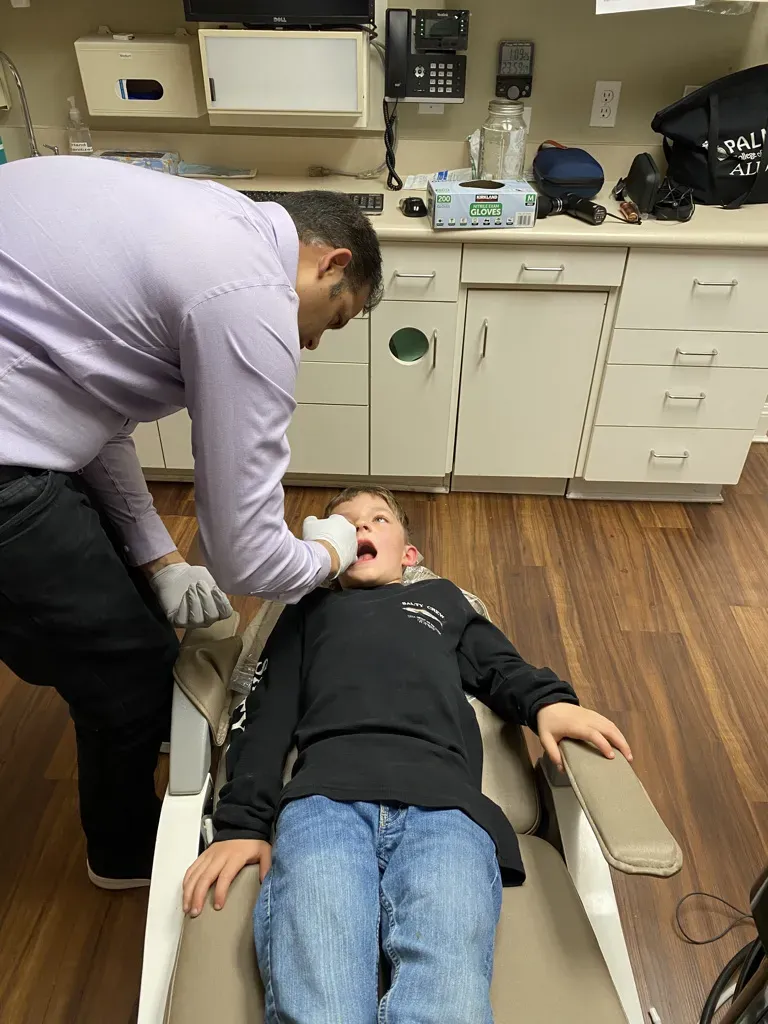
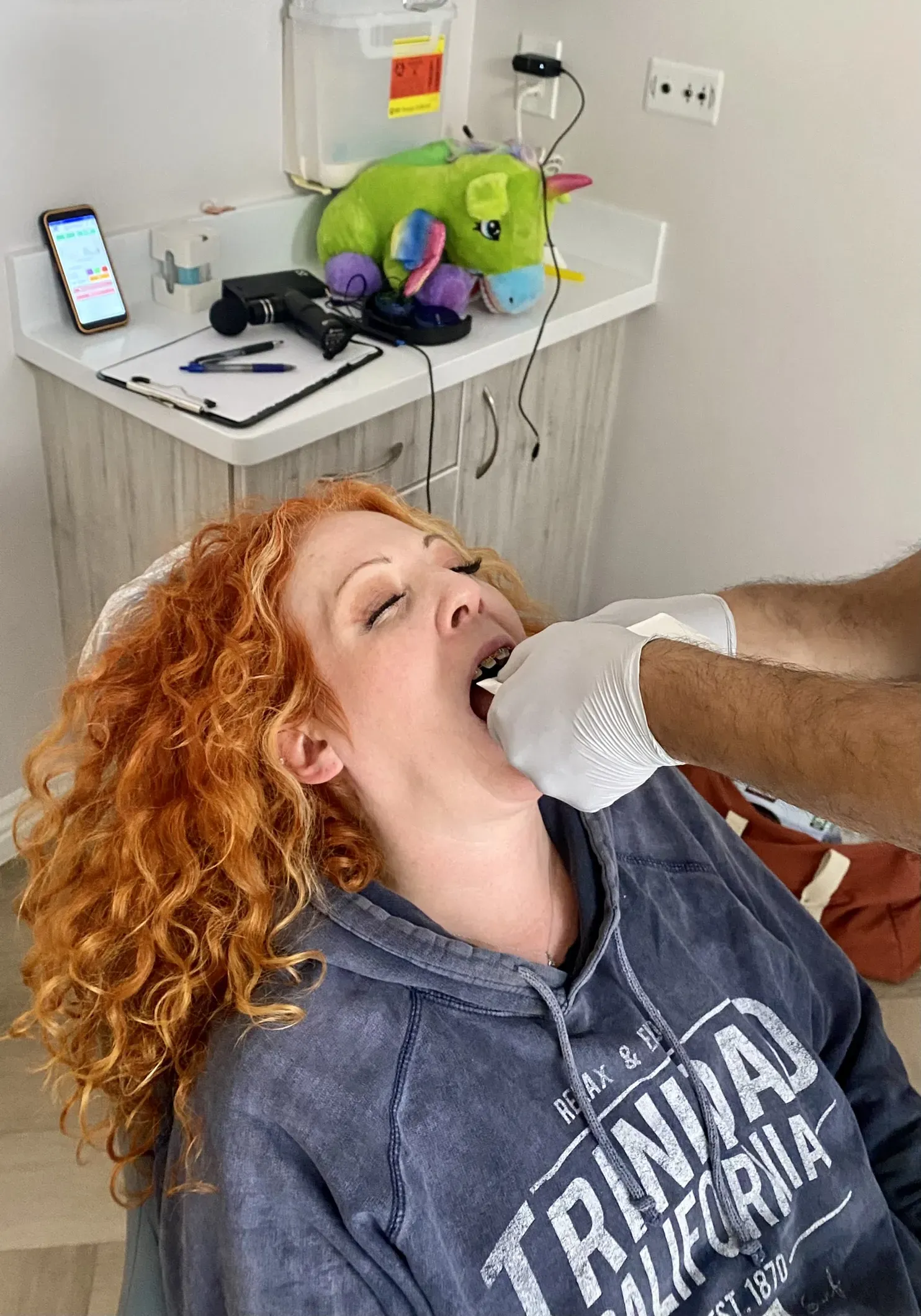
- Gentle intraoral work, with gloves and only with your consent, to address tension around the jaw and tongue
- Work through the neck, upper back and other areas that seem to be feeding the pattern
- Breath-focused integration and simple practices to take home
Work can be gentle and subtle or deeper and more structural, depending on what's welcomed. Clients commonly report jaw comfort, less facial, neck and shoulder tension, and relief from headaches. Results vary, and this care complements, rather than replaces, care from your dentist and doctor.
When to see a dentist or doctor
Check in with a dentist or medical provider if you have:
- A jaw that locks open or closed
- Jaw pain after an injury or blow to the face
- Swelling, fever or a sudden change in your bite
- Pain that is severe, gets worse, or keeps you from eating normally
- Ringing in the ears, hearing changes or dizziness, so other causes can be ruled out
- New, severe or different headaches
Get emergency help right away if jaw pain comes with chest pain or pressure, shortness of breath, sweating or nausea. Jaw pain can be a sign of a heart problem.
Frequently asked questions
Can a chiropractor help with TMJ?
Many people with TMD look for conservative, hands-on care, and chiropractors who work with the jaw, neck and posture are one option. It works best alongside a dental evaluation, especially if your bite has changed or your jaw locks.
Is jaw clicking a problem?
Not necessarily. NIDCR notes that clicking or popping without pain is common and usually needs no treatment. Clicking with pain, locking or limited opening is worth having checked.
Why does my jaw hurt when I wake up?
Morning jaw soreness often points to clenching or grinding during sleep. Stress, sleep position and breathing during sleep may all play a part. A dentist can look for signs of grinding, and a doctor can screen for sleep-related breathing problems if you also snore or wake up tired.
Can posture cause TMJ problems?
Posture is one possible piece. Cleveland Clinic lists poor posture as a risk factor, while a 2020 review found clearer differences in neck sensitivity and movement than in posture itself. It's usually a combination of factors rather than a single cause.
Do I need a night guard?
Possibly. That's a question for your dentist. NIDCR notes that evidence for splints in relieving pain is limited, and recommends using only appliances that don't permanently change your bite and stopping one that causes pain.
Working with Dr. Neel
If jaw tension has been part of your life for a while, the System Reset Experience offers an immersive, whole-body approach in Santa Barbara. Ongoing in-person care is available through Standard Patient Care, and Virtual Sessions are available wherever you live. If you're not sure where to start, send an inquiry and the team will help.
This article is for educational purposes and isn't a substitute for individual medical advice. Please talk with your dentist, doctor or other licensed provider about your specific situation.
Sources
- National Institute of Dental and Craniofacial Research. TMD (Temporomandibular Disorders)
- Cleveland Clinic. Temporomandibular Joint (TMJ) Disorders
- Cuenca-Martínez F, et al. Craniocervical and Cervical Spine Features of Patients with Temporomandibular Disorders: A Systematic Review and Meta-Analysis of Observational Studies. Journal of Clinical Medicine, 2020.